
Do you need to stop running to get your period back? here's what the research actually says
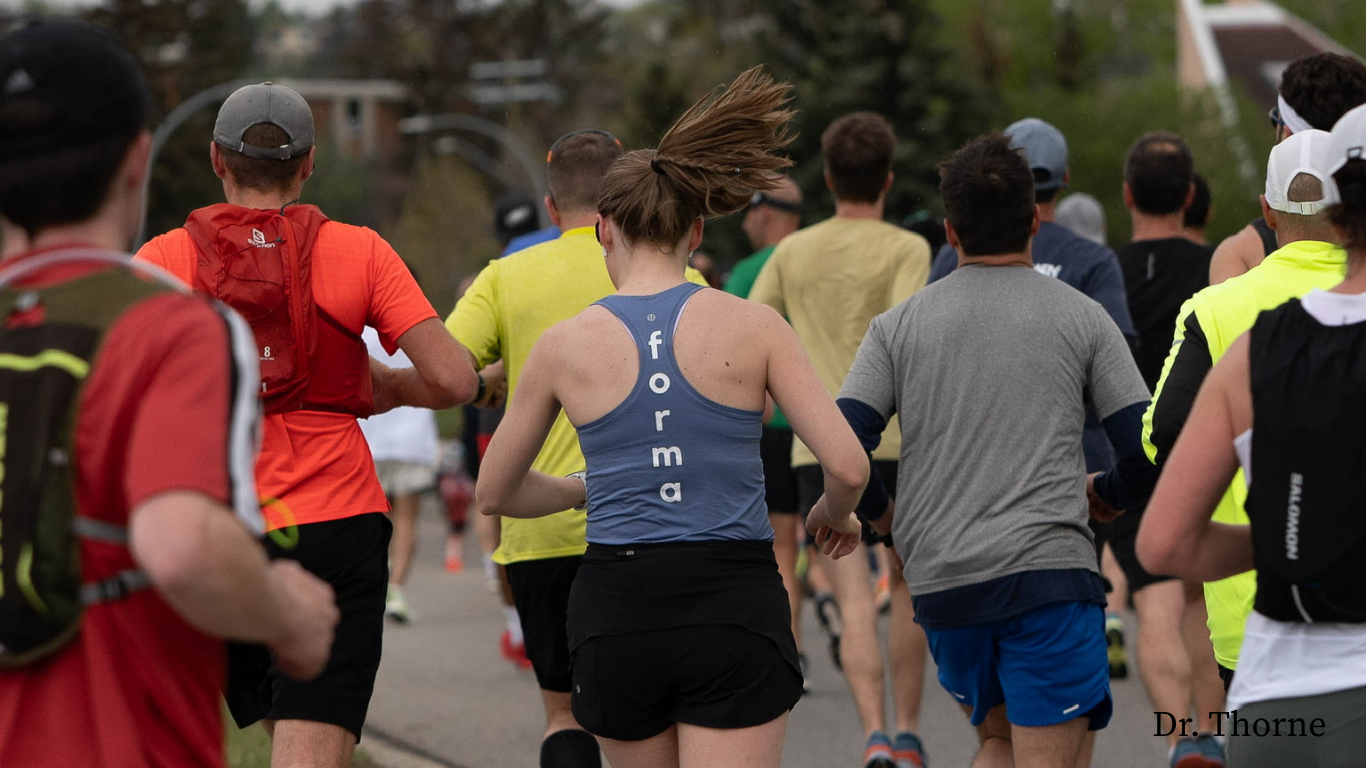
Stop training. Reduce your mileage. Take a break and your period will come back.
If you've lost your period as an athlete, there's a good chance you've heard some version of this and there's a good chance it didn't sit right with you.
Here's what the research actually supports: increasing energy intake is the primary driver of menstrual recovery -- not stopping exercise. The goal isn't to take training away. It's to make sure your body has enough fuel to sustain it.
Why 'just stop training' misses the point
Reducing training does lower energy expenditure, so technically it can help. But it doesn't fix why the gap exists in the first place.
An athlete who stops running but doesn't change how she eats is still under-fueling relative to what her body needs. The underlying problem is there is not enough energy left over after exercise to support basic physiological functions.
There's also the psychological cost. Research on hypothalamic amenorrhea consistently identifies stress as a compounding factor in cycle suppression. For many athletes, removing training entirely increases total stress load, not decreases it.
The goal is to find the version of training your body can sustain -- and fuel it properly.
What the research actually shows
The evidence is consistent: increasing caloric intake is the primary intervention for restoring menstrual function in athletes with hypothalamic amenorrhea.
Studies show that even modest increases in caloric intake (as little as 20-30% above baseline) lead to meaningful hormonal improvements. Importantly, these improvements happened in athletes whose body weight and BMI didn't change significantly. the body responded to more fuel, not to weight gain alone.
Athletes who increased their intake without reducing training restored their periods -- some within weeks. The recovery coincided with increased caloric intake, not with any change in exercise.
The research is also clear that there is no specific exercise threshold that causes amenorrhea. Some athletes lose their period from training too much without eating more. Others lose it simply from eating less. The common thread is the energy gap -- not the training itself.
The real lever: closing the energy gap
Energy availability is the fuel left over after training to run everything else -- your hormones, your heart, your immune system. When it drops below a critical threshold (around 30 kcal per kilogram of fat-free mass per day), the brain suppresses reproductive function.
There are two ways to close that gap: eat more or move less. The research supports eating more as the primary lever. It's also the more sustainable and athlete-friendly option.
Carbohydrates deserve a specific mention here. Low carbohydrate intake suppresses the hormonal pathway that drives ovulation -- even when total caloric intake looks adequate on paper. Getting enough food matters. Getting enough carbohydrates specifically matters even more for hormone recovery.
When training load does need to be addressed
The research doesn't say training is never a factor. It says stopping entirely is rarely the right answer.
In some cases, a moderate and temporary reduction in training intensity or volume alongside increased fueling makes sense:
• training volume is very high with limited recovery days built in
• multiple high-intensity sessions per week with no periodization
• sleep and recovery are consistently poor
• fueling has been genuinely addressed for 8-12 weeks with no signs of cycle recovery
Even then, this is a strategic and temporary adjustment -- not permission to stop. The goal is always to return to full training, fueled properly.
What recovery actually looks like
Getting your period back is a process, not a guessing game. Here's how I approach it with patients:
Get the right lab work first
Rule out other causes of a missing period before assuming it's low energy availability. Thyroid dysfunction, elevated prolactin, and premature ovarian insufficiency all require different approaches entirely.
[iwhat lab work do you need if you've lost your period?]
Calculate your actual energy expenditure
The full number -- training cost plus daily life. Most athletes are surprised by how high it actually is.
Find the gap
Compare what you're burning to what you're eating. The size of the gap shapes the plan and gives a realistic sense of how quickly recovery can happen.
Build a fueling plan that actually closes it
With particular attention to carbohydrate intake and timing around training. This is not a generic calorie target -- it's a plan built around your training load and your body.
Track progress
Basal body temperature, LH strips, and cervical mucus changes can all signal that the hormonal system is waking back up -- often before a full period returns. This keeps the process from feeling like a black box.
You don't have to choose between training and your hormones
Stopping running is not the answer to a missing period. Fueling the running you're already doing is.
Training is not the enemy. Under-fueling is!
If you're ready to build a plan that works for both your training and your hormones, book a free 15-minute strategy call and let's talk.
[why female athletes lose their period -- and why it's not about weight]
[what lab work do you need if you've lost your period as an athlete?]