
Why Female Athletes Lose Their Period -- and Why It's Not About Weight
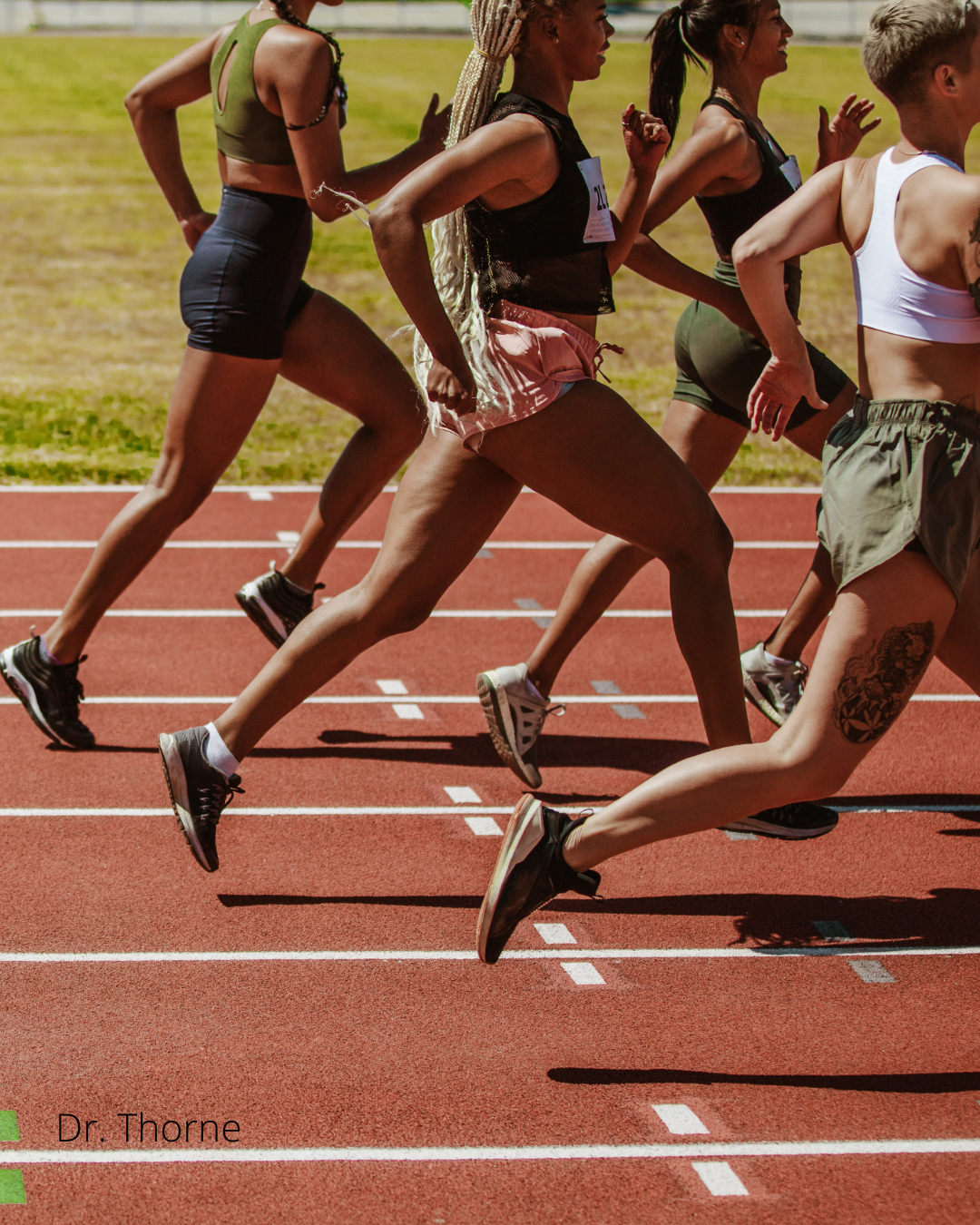
A former Division I soccer player who recently entered the world of marathoning visited my office this week. She is 10 weeks into a 12-week marathon training plan and has noticed changes in her menstrual cycle. Her last period was over three months ago.
After a recent visit to her doctor she was told that marathon training causes weight loss and that her period will come back once she stops training and gains weight. But in her mind, she doesn't believe she will ever stop training at a high level.
If you have ever been told to decrease your training to get your period back, this post is for you.
When female athletes lose their period comes down to energy availability -- and it is something most general practitioners are not trained to identify. Here's what it means and what you can actually do about it.
First, let's talk about what a missing period actually means
Your brain is the driver of your reproductive health. Your brain sends a signal to your ovaries to start growing follicles. Once a follicle reaches peak development, a signal is sent back to the brain letting it know the egg is ready to be released -- that's ovulation.
Your brain is constantly monitoring the body for resources to make sure it is safe to support a pregnancy. If it senses that fuel is running low, it will shut down reproduction. You won't ovulate and, as a result, you won't get a period.
Clinically, we call this hypothalamic amenorrhea. In athletes, it is almost always driven by one thing: not enough food coming in.
The real reason athletes lose their period: low energy availability
Energy availability is the amount of fuel your body has to perform all of its physiological tasks -- and for athletes, that includes training.
Think of it like a budget. You deposit a certain amount of food into your account each day. Your body spends a portion on your workout, and what's left over is allocated to your heart, your brain, your immune system, and your reproductive health.
If your deposit only covers your training and basic daily tasks, your body doesn't have enough left to support the other important functions -- including reproduction.
This has nothing to do with how hard you train or what you weigh.
Why weight is the wrong thing to look at
This is where a lot of athletes get failed by the medical system.
There is an assumption that if you've lost your period, you must be too thin. But for many athletes -- recreational runners and competitive athletes alike -- their weight is completely normal. Sometimes it's even higher than it used to be.
The number on the scale tells you nothing about how much fuel is left over after training. You can look completely fine on the outside while your body is quietly rationing resources on the inside.
Focusing on weight as the primary marker leads to missed diagnoses, dismissed patients, and a lot of women being told they're fine when they're not.
Other factors that compound the problem
Low energy availability is the primary driver, but it rarely operates in isolation. For most athletes it's a combination of factors that push the system over the edge:
• A sudden increase in training volume or intensity without a corresponding increase in food
• Chronically low carbohydrate intake -- even when total calories look adequate
• Elevated cortisol from psychological stress, poor recovery, or disrupted sleep
• A long history of underfueling -- even patterns that don't meet a clinical threshold for disordered eating
None of these alone necessarily causes amenorrhea. Together, they often do.
What getting your period back actually requires
Your period is not gone forever -- but getting it back takes more than eating a bit more.
Here is how I approach this with patients:
Step 1: Run targeted lab work
Before making any changes, we need to understand what's going on hormonally. Lab work helps rule out other causes of missing periods -- thyroid issues, elevated prolactin, PCOS -- and gives us a baseline to work from.
Step 2: Understand the health risks
A missing period is not just a fertility issue. It can affect bone density, cardiovascular health, and mood.
Step 3: Calculate total energy expenditure
We add up the caloric cost of daily activities plus the cost of training to get a true picture of how much energy your body actually needs each day. Most athletes are surprised by this number.
Step 4: Calculate current energy intake
We look at what you're currently eating -- not to judge it, but to find the gap. Most athletes who have lost their period are eating less than their body needs, often without realizing it.
Step 5: Close the gap
This is where the plan comes together. We look at three levers:
• Adjusting activities of daily living to reduce unnecessary energy drain
• Optimizing training load in a way that supports both hormones and performance
• Building a fueling strategy that matches your actual caloric needs -- not a generic number from an app
The goal is never to make you stop training. It's to find the version of training your body can actually sustain.
You don't have to choose between training and your hormones
The athletes I work with are often surprised by how quickly things can shift when the right factors are addressed in the right order. You don't have to give up the things you love. You just need a plan that actually accounts for who you are.
If this sounds like your situation, I'd love to talk. Book a free 15-minute strategy call and let's figure out what's going on and what to do about it.